

Prague or Budapest: a complete comparison guide covering costs, sights, and where to stay in each city
Ask a hundred travellers whether Prague or Budapest is better and you'll get close to a hundred different answers.
Some fall for Prague's fairy-tale old town on the first morning. Others spend three days in Budapest and end up staying a week.
Both cities sit in Central Europe, both sit on a river, and both routinely top “most beautiful capitals” lists, yet the trip they deliver is genuinely different.
This guide compares costs, sights, food, safety and nightlife side by side, covers how to get there from the UK, and looks at whether you should really be choosing one at all.
On cozycozy, compare hotels prices in Budapest and Prague to find the best deal.
Prague or Budapest: A Quick Comparison
Prague wins on compact, walkable beauty; Budapest wins on value, baths and nightlife. Here's the short version before the detail below.
Prague | Budapest | |
|---|---|---|
Best for | Compact beauty, walkability, first-time visitors | Value, nightlife, thermal baths |
Currency | Czech koruna (CZK) | Hungarian forint (HUF) |
Size | Small, dense historic core | Larger, split across Buda and Pest |
Distance from London | Around 1,030 km, roughly 2h by air | Around 1,480 km, roughly 2h30 by air |
Ideal trip length | 3-4 days | 4-5 days |
Is Prague or Budapest Cheaper?
Budapest is cheaper overall. According to Price of Travel's Backpacker Index, an annual survey comparing daily budget-travel costs (hostel bed, meals, transport, one paid attraction, evening drinks) across European capitals, Budapest has consistently ranked among the more affordable cities in Central Europe, while Prague typically sits noticeably higher on the same list.
A gap that reflects its stronger pull on tourism and the higher accommodation demand that comes with it.
Prague, by contrast, charges a premium for hotels and dining right around the Old Town Square and Charles Bridge, where demand is highest.
Category | Prague | Budapest |
|---|---|---|
Hostel dorm | 15-25 €/night | 12-20 €/night |
Mid-range hotel | 90-160 €/night | 70-130 €/night |
Dinner for two | 25-45 € | 20-35 € |
Local beer | 2-3 € | 1.50-2.50 € |
Beer is the one category where Prague wins outright: Czech pilsner is famously cheap by European standards, sometimes cheaper than bottled water in a pub. Budapest's overall cost advantage tends to sit around 10-20% once food, lodging and everyday spending are tallied together.
What travellers say: on forums and community threads, the “which is cheaper” question comes up almost as often as “which is better”, and Budapest wins that vote fairly consistently, with several people mentioning they spent roughly a third less there than in Prague on the same length of trip.
Prague or Budapest: Sights and Things to Do
Prague packs more landmarks into a smaller, walkable area; Budapest spreads bigger, grander sights across both banks of the Danube. Which one wins depends on whether you'd rather cover more ground on foot or see fewer things on a larger scale.
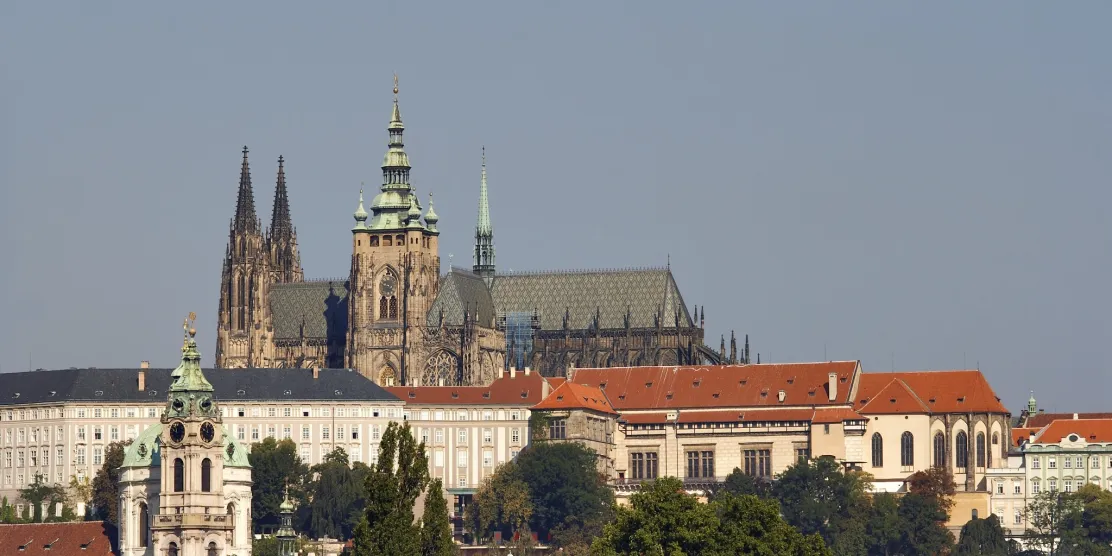
Prague's historic centre is famously compact. Prague Castle, the largest ancient castle complex in the world according to Guinness World Records, overlooks the city from Hradč any hill, while Charles Bridge and the Astronomical Clock in Old Town Square sit within easy walking distance of each other. St Vitus Cathedral, inside the castle grounds, is worth the climb for the stained glass alone. Because everything clusters so tightly, first-time visitors often see the highlights in two focused days.
Budapest spreads its landmarks across both banks of the Danube. On the Buda side, Fisherman's Bastion and Matthias Church sit above the river with some of the best skyline views in the city. Across the water in Pest, the Hungarian Parliament Building dominates the riverbank, especially once it's lit up after dark, and the Great Market Hall gives a good sense of everyday Budapest life alongside the tourist trail. Budapest also has a genuinely unique offer that Prague can't match: an entire day built around a thermal bath, rather than a museum or a monument.
What travellers say: opinions split almost evenly here. Some describe Prague as having simply more to see per square kilometre, others find Budapest's landmarks, especially the Parliament and Fisherman's Bastion, left a stronger single impression even with fewer stops overall.
Prague or Budapest Food and Drink: Goulash vs Guláš
Budapest generally rates ahead on food overall; Prague rates ahead on beer. Both kitchens share a hearty, meat-and-carbs backbone, but the flavour profile diverges sharply.

Budapest's kitchens lean on paprika: gulyás (goulash) is a rich beef and vegetable stew rather than the thick sauce often served abroad, and lángos, a fried dough topped with sour cream and cheese, is the city's essential street food, best tried at the Great Market Hall. Hungary's wine regions, particularly Eger and Tokaj, are close enough for a day trip, giving Budapest a genuine wine-country angle that Prague lacks entirely.
Prague's food scene has quietly improved over the last decade, moving beyond classic pork-and-dumplings pub fare into a wider range of modern Czech restaurants, though the traditional dish, roast pork with bread dumplings and cabbage, remains a reliable order.
What Prague really wins on is beer. Czech brewing tradition traces back to 1295, when King Wenceslas II granted the town of Plzeň the right to brew, and pilsner itself was invented there in 1842. A half-litre in a local pub rarely costs more than a couple of euros.
What travellers say: several people who've done both cities rate Budapest ahead on food overall, while still conceding that nothing in Budapest quite matches a cold Czech pilsner on a Prague terrace.
Prague or Budapest Nightlife: Ruin Bars vs Beer Halls
Budapest has the stronger, more distinctive night out, built around its ruin bars and thermal-bath evenings; Prague's nightlife is solid but more conventional.
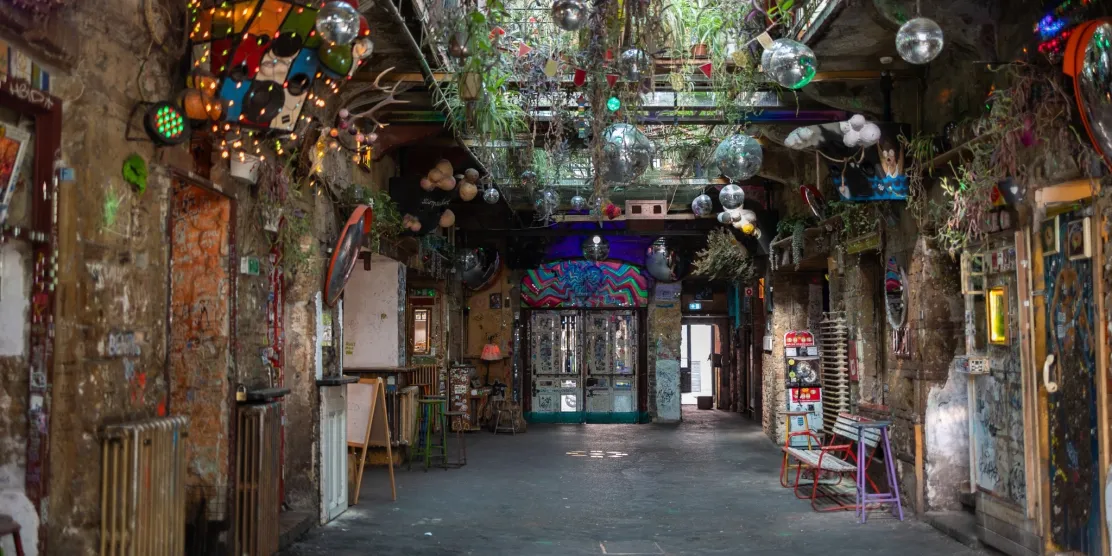
Budapest's ruin bars are the city's signature experience. Built into the crumbling courtyards of abandoned buildings in District VII, Szimpla Kert is the original and the busiest, with live music most weekends and a genuinely unusual setting. The surrounding streets are dense with alternatives, which is part of why Budapest has built a reputation as one of Central Europe's stag and hen weekend capitals. Layer thermal baths on top, Széchenyi and Gellért are the two best known, and Budapest offers an evening option Prague simply doesn't have.
Prague's nightlife is solid rather than spectacular by comparison: Dlouhá Street and the Vinohrady district cover most tastes, and the beer hall scene is excellent if that's what you're after, but it leans more tourist-facing than Budapest's underground bar culture.
What travellers say: this is one of the few categories where the traveller consensus is fairly one-sided. Budapest tends to be named as the livelier, more distinctive night out, with Prague acknowledged as more conventional.
Is Prague or Budapest Safer for Tourists?
Both cities rank among the safer capitals in Europe for tourists, and violent crime against visitors is rare in either. The real risk in both places is petty theft and low-level scams rather than anything more serious.
- In Prague: pickpocketing in dense crowds around Old Town Square, Charles Bridge and on the tram routes serving them is the main concern. Currency-exchange booths near tourist sites sometimes offer poor rates, so it's worth checking a rate online before changing money.
- In Budapest: the ruin-bar district in District VII has its own long-running scam, where a friendly local steers a tourist toward a bar that then presents a wildly inflated bill. Unlicensed taxis at the airport are another common trap in both cities, so it's worth booking a transfer or using a ride-hailing app instead of hailing a cab on the street.
What travellers say: nobody flags either city as genuinely dangerous. The recurring advice is simply to stay alert in crowds and avoid unofficial taxis, in both Prague and Budapest alike.
Prague or Budapest for Christmas: Which Is Better?
Prague is the stronger choice for a festive city break. Its Old Town Square Christmas Market, alongside smaller markets at Wenceslas Square and Náměstí Míru, sits inside a compact medieval backdrop that suits the season particularly well. Budapest's Christmas markets, especially around St Stephen's Basilica, are genuinely charming too, but the city leans harder on its winter thermal-bath experience, steaming outdoor pools in freezing air, as its real seasonal highlight rather than market browsing.
Getting to Prague or Budapest from the UK
Both cities are easy weekend-break distances from Britain by air, though Budapest is a little further and a little pricier to reach on average.
Prague | Budapest | |
|---|---|---|
Distance from London | ~1,030 km | ~1,480 km |
Flight time | Around 2 hours | Around 2h30 |
Typical one-way fare | From roughly £30 booked early, £80-160 on average | From roughly £30-50 booked early, £90-180 on average |
Direct UK airports | London (all major), Manchester, Bristol, Edinburgh | London (all major), Manchester, Edinburgh |
Ryanair, easyJet, Wizz Air, Jet2 and British Airways all fly the Prague route directly, with Ryanair, Wizz Air and British Airways covering Budapest. Both cities are served from several regional UK airports, not just London, so it's worth comparing fares from your own nearest airport rather than assuming London will always be cheapest.
Driving is possible for either but is a genuine road trip rather than a weekend option: allow roughly 12-13 hours to Prague via France, Belgium and Germany, and closer to 16-18 hours to Budapest on the same general route continuing through Austria.
Road quality throughout is good once you're on the main European motorway network. Austria, Czechia and Hungary all require a prepaid vignette to use their motorways, bought online or at the border, while Germany's motorways are toll-free.
For most UK travellers, flying and picking up a rental car locally, if needed at all given how walkable both centres are, makes more sense than driving the whole way.
Prague or Budapest: Where to Stay and What It Costs
Both cities cover every accommodation type and price band, from hostel dorms to five-star riverside hotels, and comparing listings across booking sites rather than committing to the first result tends to be where the real savings sit.
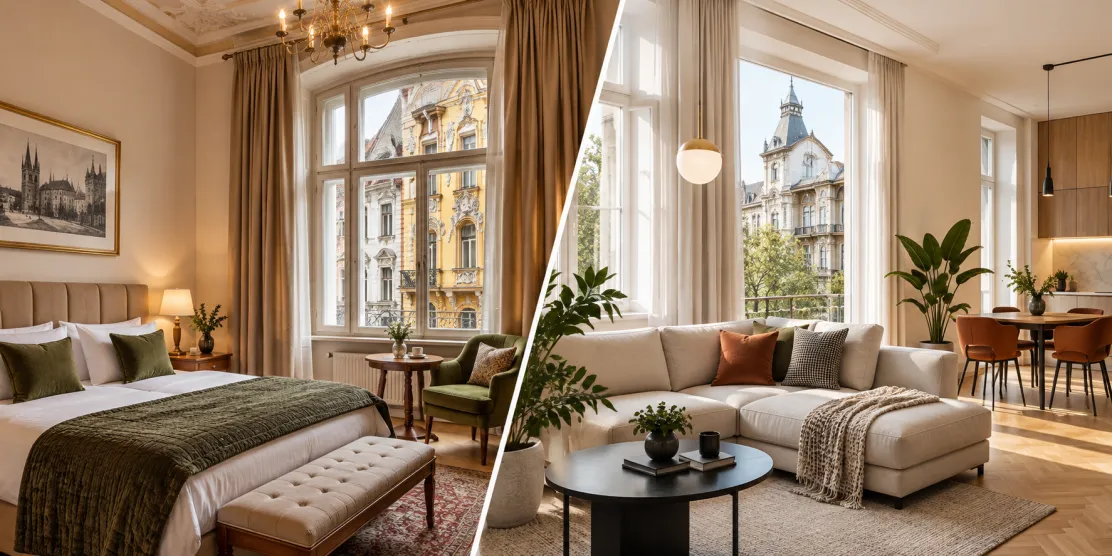
Traveller type | Prague area | Typical price | Budapest area | Typical price |
|---|---|---|---|---|
First-timer, walkability | Old Town / Malá Strana | 100-180 €/night | District V (Belváros) | 80-140 €/night |
Budget-conscious | Žižkov | 15-25 € (hostel) / 60-90 € (hotel) | District VIII (Józsefváros) | 12-20 € (hostel) / 45-75 € (hotel) |
Nightlife and going out | Old Town, around Dlouhá street | 100-170 €/night | District VII (Jewish Quarter, ruin bars) | 60-110 €/night |
Quiet, local feel | Vinohrady | 80-130 €/night | District I (Castle District) | 90-150 €/night |
Prices swing noticeably by season in both cities: expect the top of these ranges, or above, around Christmas markets in Prague and during Budapest's summer festival season, and the bottom of the range in January, February and early March in either city.
Because the same standard of room can cost 20-30% more or less just a few tram stops apart, and because both cities see genuine seasonal price swings, comparing listings side by side is usually more useful than picking a neighbourhood and booking the first result.
On cozycozy, you can compare hotels, apartments and aparthotels across both Prague and Budapest side by side, across multiple booking sites at once, which is the fastest way to see which city, and which neighbourhood, actually fits your budget for your specific travel dates.
Prague or Budapest: Which Suits Your Travel Style?
Choose Prague if:
- You have two to three days and want to walk everywhere
- A compact, photogenic medieval old town is the priority
- It's your first trip to Europe and you want something straightforward to navigate
Choose Budapest if:
- You have four or more days and don't mind using trams and the metro
- Thermal baths, ruin bars and a strong food and wine scene matter to you
- You're travelling on a tighter budget and want more for your money
Can't Choose Prague or Budapest? Do Both
Given the direct train between them takes around 6.5-7 hours, plenty of travellers skip the decision altogether and combine the two cities into a single trip, sometimes adding Vienna as a stopover in between since it sits almost exactly on the route.
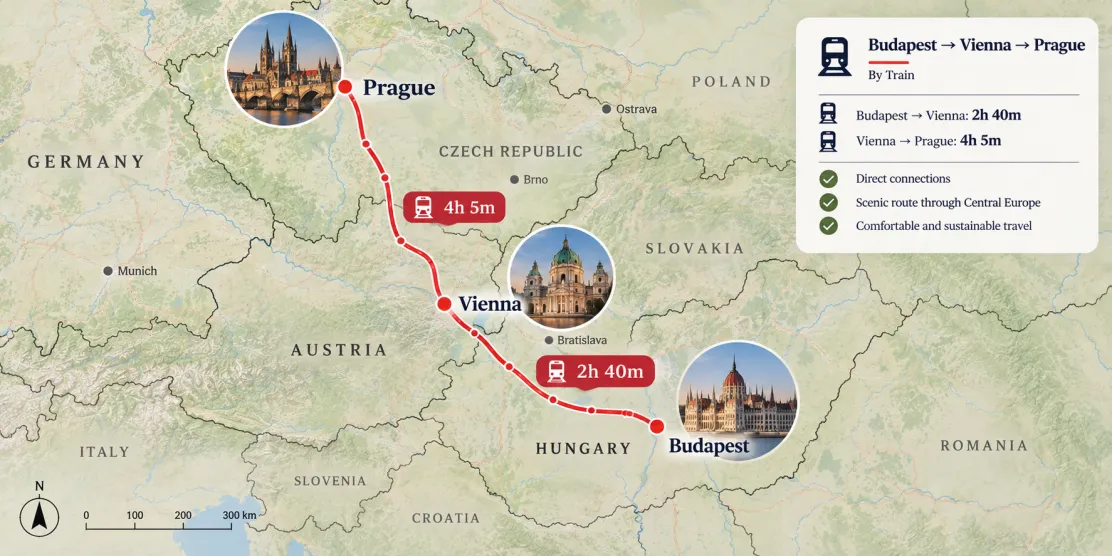
A workable ten-day version looks like this:
- Days 1-4: Budapest. Cover Buda Castle, the baths, the ruin bars and a day trip to the Danube Bend or Lake Balaton if time allows.
- Days 5-6: Vienna (optional). A roughly 2.5-hour train from Budapest, and a useful midpoint that breaks up the journey rather than doing it in one long haul.
- Days 7-10: Prague. Around 4 hours on from Vienna, or a direct 6.5-7 hour train straight from Budapest if you're skipping the stopover.
This order also tends to work well pricing-wise, since spending the Budapest and Vienna legs early leaves the shorter, denser Prague visit for the end of the trip, when most travellers are ready for a smaller, more walkable city rather than another sprawling one.
Prague or Budapest: Ready to Plan Your Trip on cozycozy?
There isn't a single right answer here, and that's really the point. Prague delivers the postcard old-town experience in a smaller, easier package, while Budapest rewards a longer stay. Backpackers and value-focused travellers tend to lean Budapest, first-timers to Europe and Christmas-market fans tend to lean Prague, and anyone with ten days or more should seriously consider not choosing at all.
Whichever city wins out, or if it ends up being both, comparing accommodation on cozycozy is a solid place to start turning the shortlist into an actual booking.
Prague or Budapest: Frequently Asked Questions
Is Prague or Budapest more beautiful?
This comes down to taste more than any objective measure. Prague's compact medieval core, with its pastel buildings and cobbled streets, tends to be described as more immediately picturesque, while Budapest's grander, more spread-out river panoramas and monumental architecture win over travellers who prefer scale to intimacy.
Should I add Vienna to a Prague and Budapest trip?
It's a natural addition. Vienna sits almost directly on the rail route between the two cities, roughly 2.5 hours from Budapest and 4 hours from Prague, which makes it easy to slot in as a two or three-night stopover rather than a separate trip.
How many days do you need for Prague and Budapest combined?
Ten days is a comfortable minimum if you want to see both properly, split roughly four nights in Budapest and three to four in Prague, with an optional Vienna stopover in between.
Is Budapest or Prague better with kids?
Both work well for families, but Prague has a slight edge for younger kids thanks to its walkable Old Town, so there's less need for public transport with a stroller or tired legs. Budapest pulls ahead for families with older kids or teens, since the thermal baths and the funicular up to Buda Castle give them something more active to do than sightseeing alone.
Is Budapest or Prague better for solo travellers?
Budapest tends to suit solo travellers slightly better, since its hostel and ruin-bar scene makes it easier to meet other travellers, and the thermal baths are a genuinely pleasant solo activity. Prague is just as safe and easy to navigate solo, but its nightlife leans more couples-and-groups than Budapest's.


