

A clear breakdown of what defines a boutique hotel, so you know exactly what you're booking.
A boutique hotel almost never has more than 100 rooms, and some have as few as 10. That single fact explains most of what makes the category feel so different from a standard chain stay. A boutique hotel is small, independently minded, and built around a design identity and a level of personal attention that big-brand properties rarely manage. It's a term that gets used loosely in marketing, so it helps to know what actually separates a true boutique hotel from a hotel simply borrowing the word.
What Does "Boutique Hotel" Actually Mean?
A boutique hotel is a small, independently run property with a distinct design character and a personalised, small-scale approach to service. That's the core of it, though the term itself has an interesting history behind it.
Hotelier Bill Kimpton is generally credited with bringing the concept to the United States after years of staying in small, personal European hotels during his travels. He opened The Bedford Hotel in San Francisco in 1981, built around exactly that idea: a fireplace in the lobby, staff who remembered your name, nothing standardised. The word "boutique" itself came a few years later. Ian Schrager and his business partner Steve Rubell coined it after opening the Morgans Hotel in New York in 1984, comparing their intimate, curated property to a boutique shop, in contrast with big chains they saw as department stores. The distinction matters: Kimpton is credited with the concept, Schrager and Rubell with the name that stuck.
What Makes a Hotel "Boutique"?
There's no official rulebook, but a handful of traits show up consistently across genuine boutique properties.
Size and Scale: Why Fewer Rooms Means More Character
Most boutique hotels sit somewhere between 10 and 100 rooms, with a lot of the best-known examples closer to the smaller end. That's not an arbitrary number. Fewer rooms means a lower guest-to-staff ratio, which is what actually makes the personal touches possible in the first place. It also changes the atmosphere entirely: instead of long corridors and a lobby built for volume, a boutique hotel can afford a communal living room, a small bar where the same guests reappear each evening, or a courtyard that never feels crowded.
Independent Ownership: No Corporate Playbook to Follow
Boutique hotels are typically independently owned, sometimes by the same family across generations, rather than run under a global franchise. That independence is what gives them room to make unconventional choices: an unusual location, an ambitious design concept, a menu built entirely around one local supplier. A branded chain has to replicate its formula across hundreds of properties. A boutique owner only has to get one building right.
Distinctive Design: Every Detail Tied to a Single Vision
Boutique hotels are designed with intent, not to a template. Interiors are usually built around one coherent creative concept rather than a standardised brand kit, which is why walking into one in a converted warehouse feels completely different from walking into one in a restored 19th-century townhouse. Local materials, commissioned art, and reclaimed architectural features tend to do a lot of the work here, tying the building to where it actually stands rather than to a corporate style guide used everywhere else.
What a Boutique Hotel Looks Like Inside
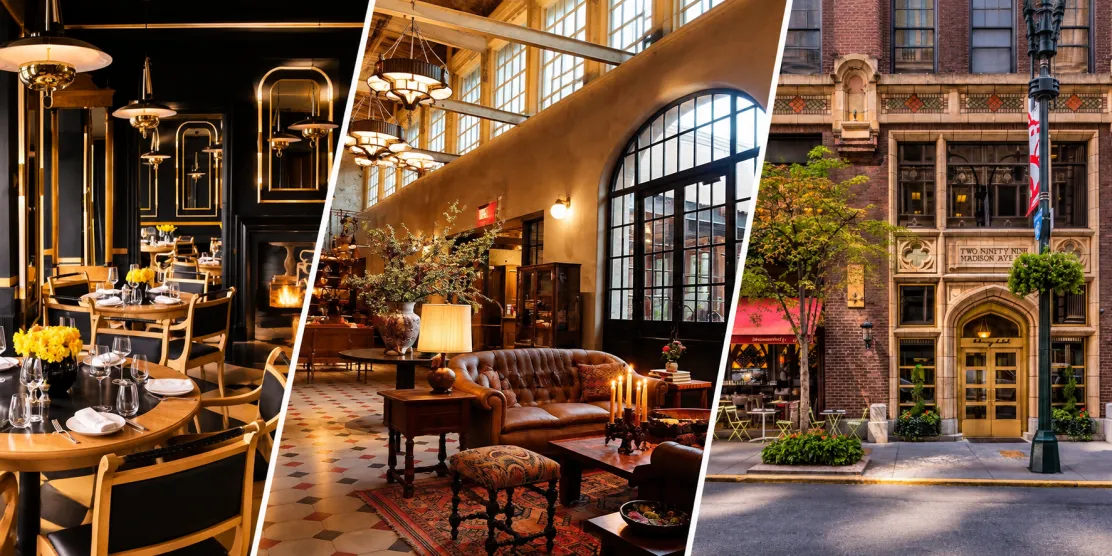
There's no single boutique look, which is part of the point, but a few visual signals tend to repeat. Expect exposed original architecture rather than uniform wallpaper: old brick, timber beams, or industrial fittings left visible instead of covered over. Furniture is often a mix of vintage or locally made pieces rather than matching sets bought in bulk, and public spaces, a small library, a single striking lounge, a rooftop bar, tend to carry more personality than the bedrooms themselves. A hotel built around a literary theme might colour-code each floor by genre; one built around local craft might fill the walls with commissioned work from artists based streets away. If a hotel's interior could be swapped into any city without anyone noticing, it almost certainly isn't a genuine boutique property.
A Defined Theme: The Concept That Ties Everything Together
Many boutique hotels build the entire stay around one clear idea rather than trying to appeal to everyone. Some lean into local history or a historic building's original use, some centre on art, food, or wellness, and a few commit to something as specific as a single colour or literary genre. The theme isn't decorative dressing. It usually shapes the menu, the staff training, and the amenities on offer, which is what makes the stay feel considered rather than assembled.
Personalised Service: The Human Touch Chains Struggle to Scale
A lower guest-to-staff ratio means boutique hotel staff are more likely to actually remember a returning guest's name and preferences, rather than reading them off a screen. Concierge teams at genuine boutique properties tend to have more time per guest, which shows up in small, specific ways: a curated recommendation instead of a generic tourist map, a welcome note that references something the guest mentioned at check-in. It's a difference in depth of attention rather than a difference in effort.
Boutique Hotel vs Chain Hotel: What's the Difference?
Side by side, the two models pull apart quickly.
Criteria | Boutique hotel | Chain hotel |
Size | Usually 10 to 100 rooms | Often several hundred rooms |
Ownership | Independent, sometimes family-run | Franchise or corporate brand |
Design | Unique to each property | Standardised across locations |
Service | Personal, often name-based | Consistent, process-driven |
Amenities | Curated, sometimes limited | Extensive: pools, ballrooms, conference space |
Predictability | Varies property to property | Consistent guest experience everywhere |
Neither model wins outright. Chains offer predictability, which matters for business travel or large groups who need every stay to run the same way. Boutique hotels offer character, which matters when the accommodation itself is part of the reason for the trip.
Is a Boutique Hotel Always a Luxury Hotel?
Not necessarily, and this is where a lot of the confusion sits. A hotel earns the boutique label through its design, size, and independence, not through its price bracket. Plenty of boutique properties sit firmly in the mid-range, offering a smaller footprint and simpler amenities without five-star trimmings attached. At the other end, high-end "design hotels" and "lifestyle hotels" often overlap heavily with the boutique category, sometimes to the point of being indistinguishable in practice. Paying more doesn't automatically make a hotel boutique, and a modest price tag doesn't disqualify one either. Price tends to track location and amenity level far more closely than it tracks the boutique label itself.
Boutique Hotel Examples: Real Properties That Define the Category
- Hotel Emma, San Antonio: a restored 19th-century brewery building, mixing historic architecture with contemporary design and a strong food and drink programme.
- The Library Hotel, New York: built entirely around a literary theme, with each of its ten floors dedicated to a different Dewey Decimal category.
- Blakes Hotel, London: designed by Anouska Hempel and widely credited as one of the earliest true boutique hotels, with rooms styled around Asian, Moroccan, and colonial influences.
- Aria Hotel, Prague: a music-themed property where all 51 rooms are named after a composer or performer, spread across four genre-themed floors.
- Secret de Paris Hotel & Spa, Paris: 29 rooms built around Parisian landmarks, from the Eiffel Tower to the Musée d'Orsay.
Boutique Hotels: Which Type of Stay Are They Best For?
Boutique hotels tend to suit certain kinds of trips especially well.
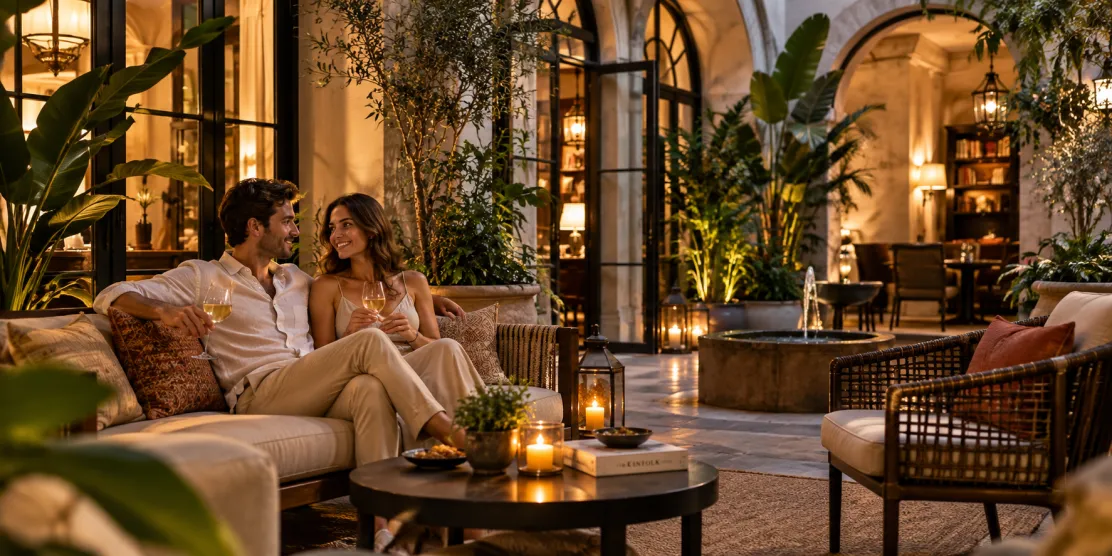
- Romantic getaways: the intimacy, attentive service, and design-led atmosphere of a boutique hotel consistently draw couples looking for something more memorable than a standard city hotel, with properties like Aria Hotel in Prague built almost entirely around that kind of stay.
- Solo city breaks: the smaller scale and communal spaces, a shared lounge, a lobby bar, a courtyard, make boutique hotels genuinely sociable for solo travellers in a way a 300-room chain hotel rarely is.
- Milestone celebrations: anniversaries and honeymoons in particular suit the theatrical, story-driven design many boutique hotels lean into, with a property like Secret de Paris in Paris built specifically around that kind of occasion.
How to Spot a Boutique Hotel When Booking
A few checks help separate a true boutique property from a chain simply borrowing the word.
- Check who owns it. An independent name or a small regional group is a stronger signal than a familiar international brand attached to the listing.
- Look at the room count. Anything comfortably under 100 rooms fits the traditional definition. Well over that, and "boutique" is likely a marketing label rather than a structural fact.
- Read the design story. Genuine boutique hotels usually explain their concept clearly: a converted townhouse, a former factory, a specific artist collaboration.
- Compare the amenities list. A large spa, several restaurants, and a big conference centre point towards a lifestyle-branded chain property rather than a true boutique.
Compare Boutique-Style Stays on cozycozy
Boutique hotels reward travellers who want their accommodation to be part of the story, not just a place to sleep. Whether that means a converted townhouse in London or a music-themed stay in Prague, the appeal comes down to character you won't find twice.
Cozycozy is the easiest place to compare that kind of stay for your next destination.
FAQ: Boutique Hotels
What defines a boutique hotel?
A small, independently owned property, usually under 100 rooms, built around a distinctive design concept and a personalised approach to service rather than a standardised chain formula.
Why is it called a "boutique" hotel?
The term was coined by Ian Schrager and Steve Rubell after opening the Morgans Hotel in New York in 1984, comparing their small, curated property to a boutique shop, in contrast with the department-store scale of major hotel chains.
How much does a boutique hotel cost?
There's no fixed price bracket. Boutique hotels range from modest, simply furnished stays to high-end design-led properties, and the price tends to follow location and amenities rather than the boutique label itself. As a general trend, boutique hotels in major city centres or landmark buildings sit toward the higher end, while smaller independent properties in less central areas often come in close to standard hotel rates.
What's the difference between a boutique hotel and a lifestyle hotel?
Lifestyle hotels are often boutique-style properties launched by major hotel groups, combining a curated aesthetic with the backing and consistency of a large brand. A true boutique hotel is usually independently owned outright, with no chain behind it.


